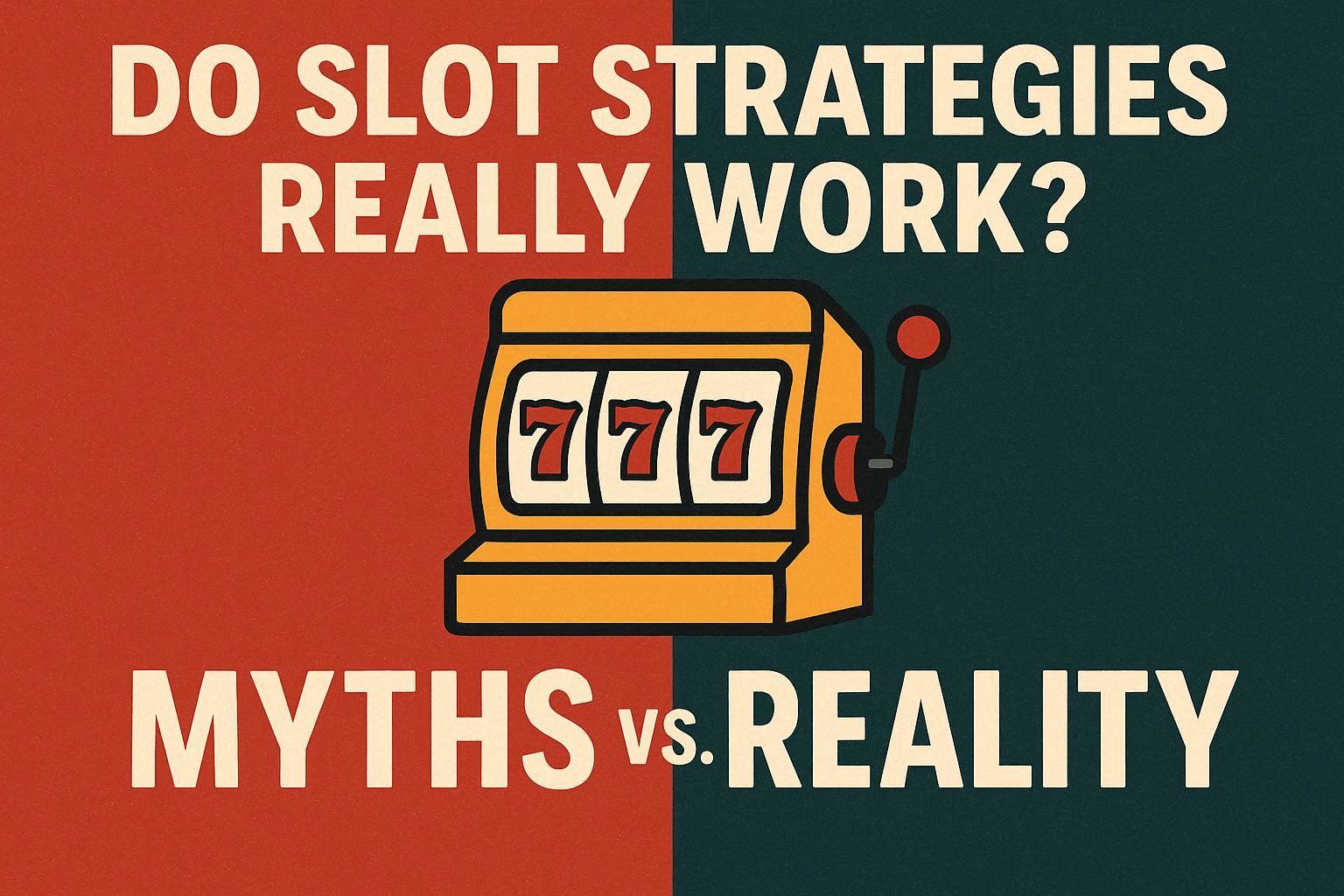
You’ve probably heard them all. The guy at the casino who swears he can “feel” when a machine is about to pay out. Your friend who insists slots are looser on weekends. That online forum claiming you can beat the system with perfect timing. But here’s the question that actually matters: do any of these slot strategies really work?
Let’s cut through the noise and get to the truth. Because when you’re putting your money on the line, you deserve to know what’s real and what’s just wishful thinking.
The Technology Behind the Curtain
Before we dive into specific strategies, you need to understand what you’re actually dealing with when you play slots. Every modern slot machine—whether you’re pulling a physical lever in Vegas or clicking “spin” on your phone—is controlled by something called a Random Number Generator (RNG).
Here’s how it works: the RNG is continuously generating random numbers, even when the machine isn’t being played, producing thousands of results per second. When you hit that spin button, you’re not starting some magical process. You’re simply capturing whatever number the RNG happened to be on at that exact microsecond.
Think of it like this: imagine a constantly spinning lottery wheel that never stops, even when nobody’s watching. Your “spin” just freezes it at whatever position it’s at in that precise moment. The result is determined the microsecond you press spin, rendering timing-based strategies mathematically impossible.
This is crucial because it destroys the foundation of most slot strategies you’ll hear about. The RNG doesn’t care if you’ve been losing for an hour. It doesn’t remember that someone just won the jackpot. It has no concept of “hot” or “cold” streaks. Each spin is completely independent—a fresh start with exactly the same odds as the previous one.
The Biggest Myths (And Why They Won’t Die)
Now let’s tackle the strategies and beliefs that simply won’t go away, no matter how much evidence contradicts them.
Myth #1: Machines Are “Due” for a Win
This is probably the most expensive misconception in the casino. You’ve been playing for 100 spins without a significant win, so the machine must be ready to pay out soon, right?
Wrong. When it comes to gambling, persistence doesn’t pay off, as all games are based on random outcomes and each time you place a bet, the result is completely independent of the previous ones. Losing 10 times in a row doesn’t make you even slightly more likely to win on the 11th try.
Previous results don’t matter—a machine that hasn’t paid in 100 spins has the same odds on spin 101. The RNG has no memory. It’s not keeping score. It’s not building up to anything.
Myth #2: Hot and Cold Machines
You’ve seen it happen: someone sits down at a machine and hits three bonuses in twenty minutes. The machine is “hot,” so you should jump on it when they leave, right? Or maybe you should avoid it because it just paid out and won’t hit again for a while?
Neither approach works. Slots don’t get hot or cold, as slot machines use a random number generator to determine the outcome of each play, ensuring each spin produces a random result unrelated to the last one.
When you see someone winning multiple times in a row, that’s not the machine being generous. It’s just randomness clustering in a way that happens to look like a pattern to our pattern-seeking brains. You’re just as likely to win (or lose) on a machine that just paid a jackpot as on one that hasn’t hit in months.
Myth #3: Timing Your Spins
Some players believe they can influence outcomes by pulling the lever at just the right moment or hitting the stop button to freeze the reels on a winning combination. This strategy is based on a complete misunderstanding of how slots work.
Modern slots use Pseudo-Random Number Generators that process thousands of results per second, and when you hit the button, you aren’t starting a new cycle but simply capturing the number that the algorithm generated at that exact microsecond. By the time your brain processes what you’re seeing and sends the signal to your finger to press the button, the RNG has cycled through thousands of different outcomes.
You can’t time it. You can’t game it. The speed of the RNG makes human reaction time completely irrelevant.
Myth #4: Casinos Loosen Slots on Weekends
This myth has remarkable staying power. The logic seems sound: weekends are busy, so casinos make machines pay out more to attract crowds and keep people playing.
The idea that casinos “tighten” machines on weekends is a total myth, as in modern gaming, RTP is hard-coded by providers and cannot be changed mid-session by the operator. The payout percentage of a slot machine is programmed into its software by the game developer—companies like Pragmatic Play or NetEnt. The casino can’t just flip a switch and make it more generous on Saturday night.
Could a casino change a machine’s RTP? Technically yes, but it would require replacing computer chips and getting regulatory approval. This isn’t something that happens based on the day of the week.
Myth #5: Bigger Bets Equal Better Odds
This one trips up a lot of players. You might think that betting max coins increases your chances of winning, not just the size of the potential payout.
On the vast majority of modern slots, the probability of hitting a winning combination does not change based on your bet size, as the RNG does not know if you bet one dollar or five dollars. What changes is the payout amount, not your odds of winning.
Now, there’s a caveat here: some older slot machines and certain progressive jackpot games do require max bets to be eligible for the top prize. But that’s about access to specific payouts, not about changing the fundamental probability of winning.
Myth #6: You Can Predict When Jackpots Will Hit
Some people track machines, looking for patterns in when jackpots drop. Others believe that the biggest progressive jackpots are “due to win,” but in reality, the biggest progressives are the hardest to win.
A progressive jackpot that’s climbed to an unusually high amount isn’t “ready” to drop. It’s high precisely because it’s been difficult to hit. The odds haven’t changed just because the prize has grown.
What Actually Works
Alright, so most strategies don’t work. Does that mean you’re completely powerless? Not exactly. There are legitimate ways to improve your slot experience and get more value for your money. They’re just not as exciting as “secret systems.”
Choose High RTP Games
RTP stands for Return to Player, and it’s expressed as a percentage. Slots with RTPs above 96% are generally considered favorable, as higher RTP means better long-term returns.
Here’s what this actually means: a slot with 96% RTP will, over millions of spins, pay back $96 for every $100 wagered. Notice the words “over millions of spins.” This is a long-term statistical average, not a guarantee for your session.
A slot machine’s payout percentage is averaged over its lifetime—not just one session, day, or week. You could play a 98% RTP slot for an hour and lose everything, or play a 92% RTP slot and win big. In the short term, anything can happen. But over time, higher RTP games give you better value.
The catch? You need to actually check the RTP. The exact same game could be a high-RTP version at one casino and a low-RTP version at another, and regulated providers are legally required to list the exact RTP version in the game’s Help or Info file. Don’t assume—verify.
Understand Volatility
This is where things get interesting. Volatility (sometimes called variance) describes the risk level of a slot game.
Low variance slots offer frequent but smaller payouts, making them suitable for players who prefer to play longer without significant risk. These games won’t make you rich, but they won’t drain your bankroll quickly either. They’re the steady, predictable option.
High volatility slots are the opposite. You might go 50, 100, even 200 spins without winning anything significant. But when they hit, they can hit big—sometimes paying 5,000x or even 10,000x your bet.
Neither is “better.” It depends on what you want. If you’re playing for entertainment and want your money to last, choose low volatility. If you’re chasing that life-changing win and can handle long dry spells, high volatility might be your game.
The key is matching the volatility to your bankroll and goals. Don’t play high-volatility slots with money you can’t afford to lose.
Set Strict Limits (And Actually Follow Them)
This isn’t glamorous, but it’s probably the most effective “strategy” you can use. Discipline is key when playing slots, as it prevents emotional decisions and helps you lock in profits.
Before you start playing:
- Decide how much you’re willing to lose
- Set a win goal (if you’re up 50%, consider walking away)
- Determine when you’ll quit (after losing 30% of your bankroll, for example)
The hardest part isn’t setting these limits—it’s sticking to them when you’re caught up in the moment. When you’re on a losing streak and convinced the next spin will turn it around, that’s when discipline matters most.
Take Advantage of Bonuses (But Read the Fine Print)
Online casinos offer bonuses, free spins, and promotions. These can provide real value, but they come with strings attached.
Always read the wagering requirements. That “free” $100 bonus might require you to bet $3,000 before you can withdraw any winnings. Some bonuses restrict which games you can play or cap your potential winnings.
Smart players use bonuses to extend their playtime and try new games without risking as much of their own money. They don’t expect to actually withdraw the bonus itself.
Know When to Walk Away
One of the most underrated strategies is knowing when to stop, particularly when you’re playing emotionally, have reached your budget limit, or the game is no longer enjoyable.
This applies whether you’re winning or losing. It’s easy to see why you should quit when you’re down—you’re trying to prevent further losses. But it’s equally important to walk away when you’re up. That big win feels amazing, but if you keep playing, the house edge will gradually erode your profits.
The casino is designed to keep you playing. The lack of clocks, the free drinks, the comfortable seats, the exciting sounds—it’s all engineered to make you lose track of time and keep spinning. Your best defense is self-awareness and predetermined stopping points.
The Psychology Behind the Myths
You might wonder: if these strategies don’t work, why do so many people believe in them?
The answer lies in how our brains work. We’re pattern-recognition machines. When we see two events happen close together—say, switching machines and then winning—our brains want to connect them causally, even when they’re just random coincidence.
This is called confirmation bias. You remember the times your “strategy” worked and forget the times it didn’t. That one time you switched to a different machine and immediately won reinforces your belief that machine-hopping works, even though you’ve switched machines dozens of other times with no result.
Near-misses make this worse. When the reels show two jackpot symbols with the third just one position off, it feels like you almost won. Your brain interprets this as “getting closer,” as if the next spin is more likely to hit. But the “near misses” you see are not the machine teasing you with what might have been; they’re simply the visual result of a number that the math had already decided.
The game designers know this. They program near-misses to occur more frequently than true randomness would produce, because it keeps you playing.
The Bottom Line
Here’s what you need to accept if you’re going to play slots: the house always has an edge. Always. There is no system, no strategy, no ritual that will overcome the mathematical advantage built into these games.
No strategy or system will help you overcome the house advantage or beat the odds, as every game of chance is designed around randomness.
Does this mean you shouldn’t play slots? Not necessarily. But it does mean you should approach them with the right mindset. You’re paying for entertainment, not investing in a money-making opportunity. The cost of that entertainment is the money you’ll statistically lose over time.
If you can afford that cost and you enjoy the experience, go ahead and play. Just do it with your eyes open. Understand that:
- You cannot predict when a machine will pay out
- You cannot influence the RNG through timing or rituals
- Past results have zero impact on future spins
- The casino’s edge is real and unavoidable
The “strategies” that work aren’t really strategies at all—they’re just smart money management and informed game selection. Choose high-RTP, appropriately volatile games. Set strict limits. Use bonuses wisely. Walk away when you’re supposed to.
It’s not exciting advice. There’s no secret code to crack, no system to master, no way to “beat” the slots. But it’s the truth. And in a world full of gambling myths and scams, the truth is the most valuable thing you can have.
Remember: while you can’t influence the RNG, you can make smarter decisions about which games to play, how to manage your bankroll, and when to walk away. That’s not beating the system—it’s playing it as intelligently as possible.
The question isn’t whether slot strategies work. Most don’t. The real question is: are you playing for the right reasons, with the right expectations, and with money you can afford to lose? Answer those honestly, and you’ll have more success than any “system” could ever give you.